
Wildlife, Volcanoes &
Village Life in Yogyakarta
Jeep rides through lava fields, encounters with tropical nature, and the warm embrace of authentic Javanese village life — the most unforgettable school holiday in Southeast Asia.
Somewhere between the roar of a jeep engine and the stillness of a rice paddy at dawn, something shifts. What started as a holiday becomes something harder to name — part education, part adventure, part homecoming to a world most of us have forgotten exists. This is Yogyakarta, and it has a way of doing that to people.
For most travelers, Yogyakarta means temples — the magnificent spires of Prambanan, the meditative tiers of Borobudur. And those, of course, are worth every step. But just a short drive north of the city, the landscape transforms dramatically. The ground turns grey and gritty. Volcanic boulders the size of cars sit scattered like dice thrown by a giant. And rising above it all, cloaked in cloud or startlingly clear against blue sky, is Mount Merapi — one of the most active volcanoes on Earth, still very much alive.
This is the Yogyakarta that not enough people see. And it is, without question, the one that stays with you longest.
Mount Merapi: Living Geology at Its Most Dramatic
Merapi is not a dormant relic. It is an active, breathing geological force that has shaped the landscape, the culture, and the daily rhythms of millions of people in Central Java for centuries. The name itself translates simply as “Mountain of Fire” — and the locals who live on its slopes do so with a deep, respectful familiarity that outsiders find both astonishing and instructive.

The most significant recent eruption occurred in October 2010. Pyroclastic flows — superheated clouds of ash and gas moving at devastating speed — swept down the southern and southeastern slopes. Entire villages were buried or destroyed. The landscape was rewritten in hours. More than 350 people lost their lives. And yet today, those same slopes have become one of the most compelling destinations for anyone seeking to understand the raw relationship between nature, human resilience, and the passage of time.
It is this story — of destruction and rebuilding, of nature’s overwhelming power and stubborn human tenacity — that makes the Merapi Lava Tour far more than just an off-road thrill. It is, at its core, a lesson in geography, history, ecology, and the human spirit. All delivered in the back of a vintage jeep, wind in your hair, with an active volcano watching from above.
“The fact that locals could live side by side with a volcano that had taken so much — and still do so with a kind of quiet dignity — is one of the most humbling things I have ever witnessed.”
— Traveler account from the slopes of MerapiThe Merapi Lava Tour: What Happens When You Ride Into the Aftermath
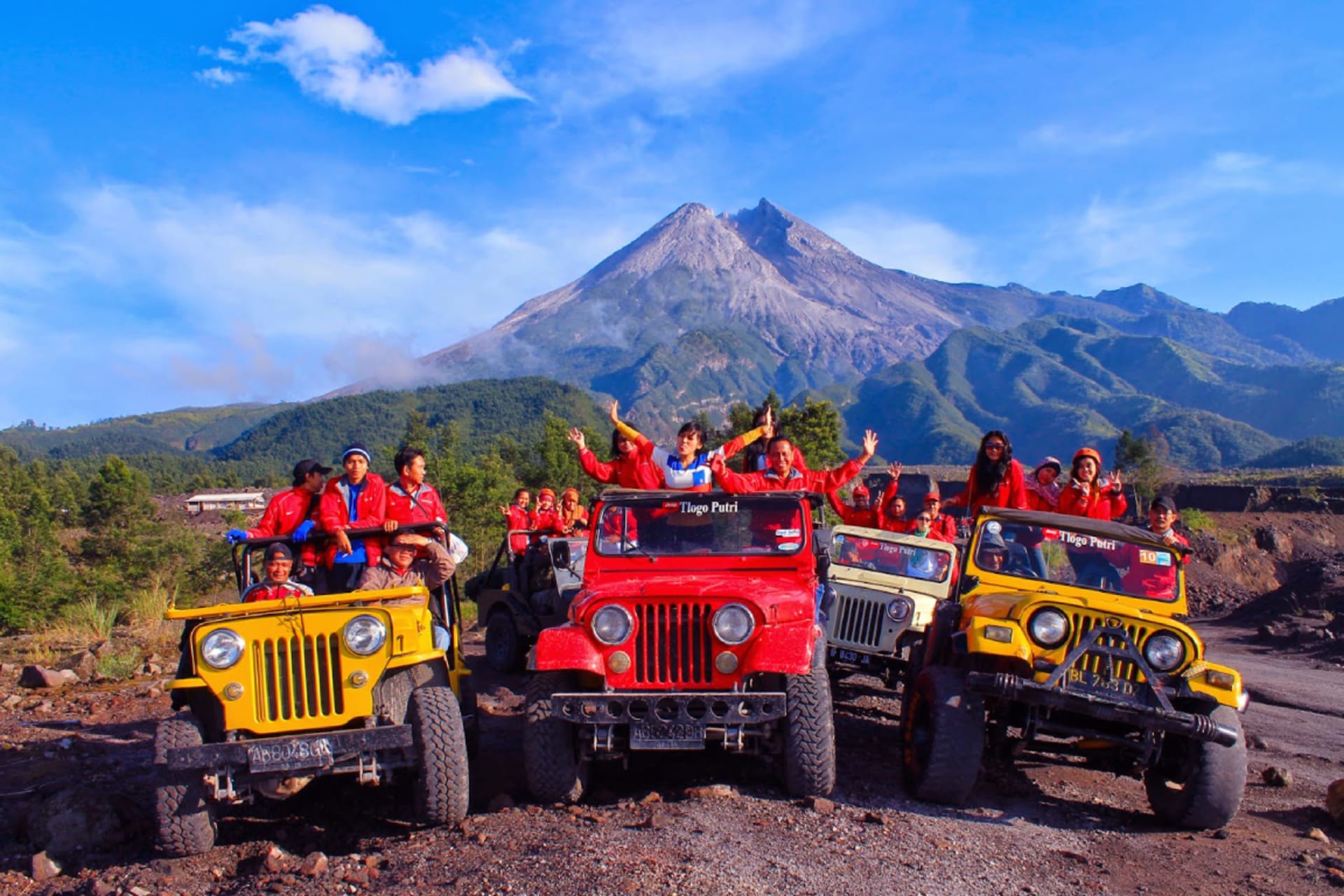
The Merapi Lava Tour takes you by open-top 4×4 jeep through the volcanic landscape on Merapi’s southern flank — across rivers of hardened lava, past ruins of villages swallowed by the 2010 eruption, and up to viewpoints where the summit feels impossibly close. Each jeep comfortably fits four passengers, guided by a local driver who grew up in these hills and knows their stories intimately. Tours are available in three durations, each covering a curated selection of the most significant sites.
- Museum Sisa Hartaku
- Alien Stone (Batu Alien)
- Kaliadem Bunker
- Museum Sisa Hartaku
- Alien Stone
- Kaliadem Bunker
- Kali Kuning River
- All medium stops
- Mbah Maridjan’s site
- Lava river crossing
- Village ruins & viewpoints
There is also a sunrise option — departing before dawn to reach the upper slopes in time for first light breaking over the volcanic landscape. Standing in the cool pre-dawn air with Merapi glowing above you and the lights of Yogyakarta scattered below is the kind of sight that recalibrates your sense of scale in the most beautiful possible way.
The Stops That Tell the Story

This is not your typical museum. It is a family’s home — partially destroyed by the 2010 eruption — transformed into a testament to what was lost and what survived. Inside, personal belongings are arranged just as the pyroclastic flow left them: motorcycles fused to the floor, kitchen utensils melted together, a wall clock whose hands froze at the exact moment the eruption reached the house. Animal skeletons. Photographs. A family’s entire life, preserved in ash. For young visitors especially, this is an intensely powerful educational experience — more vivid than any textbook chapter on natural disasters could ever be.
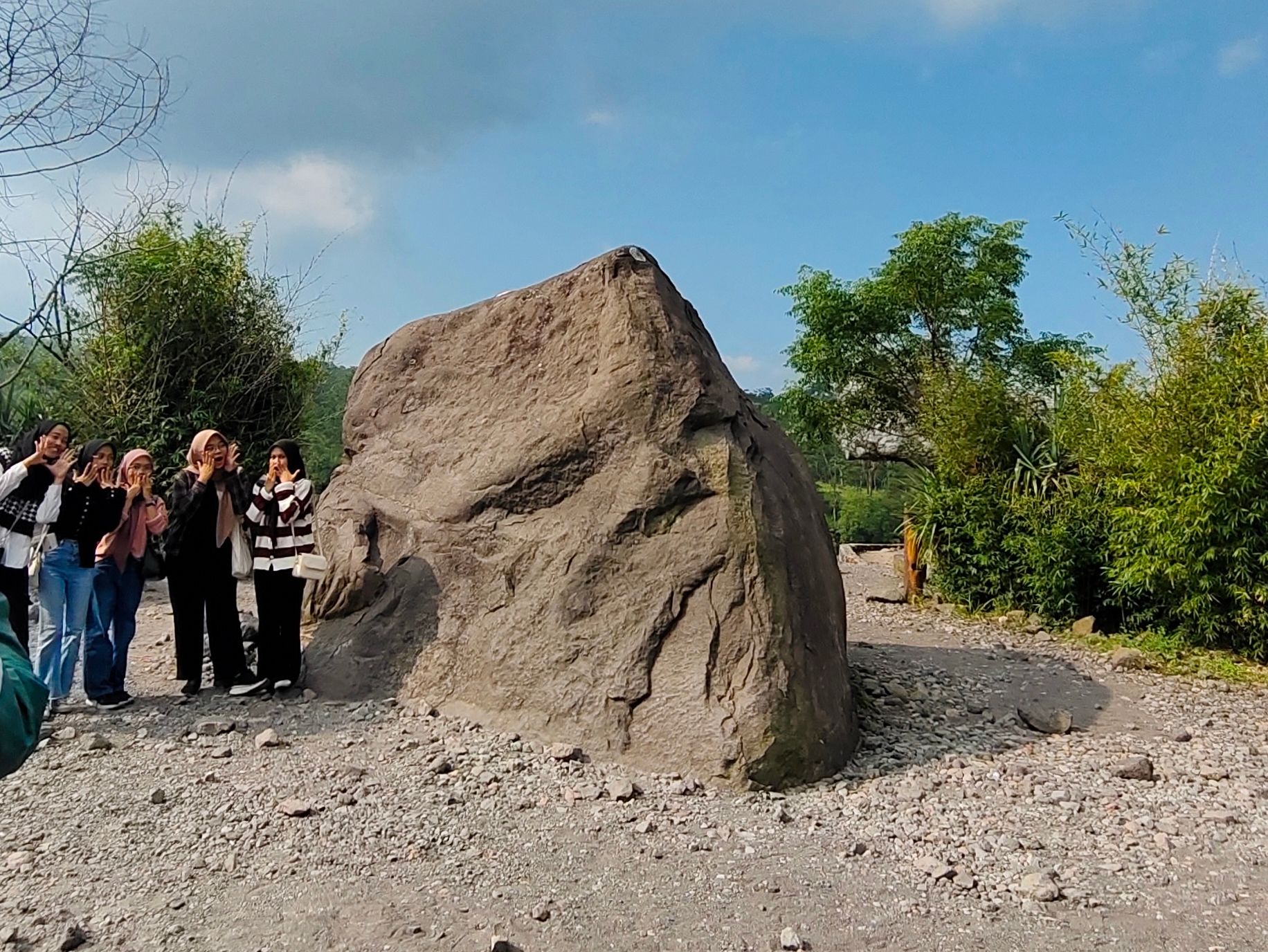
A massive volcanic boulder — hurled kilometres from the summit during the 2010 eruption — that earned its nickname because its weathered surface bears an uncanny resemblance to the creature from the Alien films. It sits dramatically against the open volcanic plain with Merapi rising behind it, offering one of the most arresting natural backdrops in all of Java. Children adore it. Adults are quietly stunned by the sheer force of energy that must have launched something this size through the air. It has become the most-photographed single landmark on the entire Lava Tour route — and rightly so.
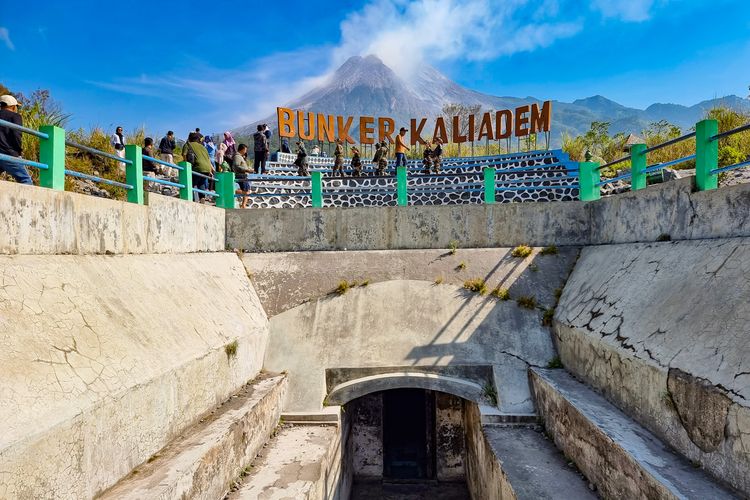
Built in 2001 as a protective shelter, the Kaliadem Bunker stands as a sobering monument to the limits of human engineering in the face of geological force. During the 2006 eruption, two men sought shelter inside. The bunker’s thick concrete walls and heavy steel doors were no match for the extreme temperatures of the pyroclastic flow. They did not survive. Today, visitors can enter the cramped interior and stand at the summit viewpoint above it — looking directly up at the volcano’s crater, just five kilometres away. It is a moment of genuine awe, and a profound discussion point about disaster preparedness, volcanic science, and community resilience.

The Kali Kuning river channel served as one of the primary paths for cold lava flow during and after the 2010 eruption. Today it is a dramatic grey-and-white landscape of volcanic sand and rock, flanked by vegetation slowly reclaiming the banks. On the medium and long routes, jeeps drive through the river channel itself — a bumpy, exhilarating stretch that delights younger passengers and provides a tangible sense of the scale of material that once flowed through here. The river also offers fascinating insight into how volcanic landscapes regenerate over time, making it a natural classroom for ecology and earth science.
Wildlife on Merapi’s Slopes: Nature’s Quiet Return

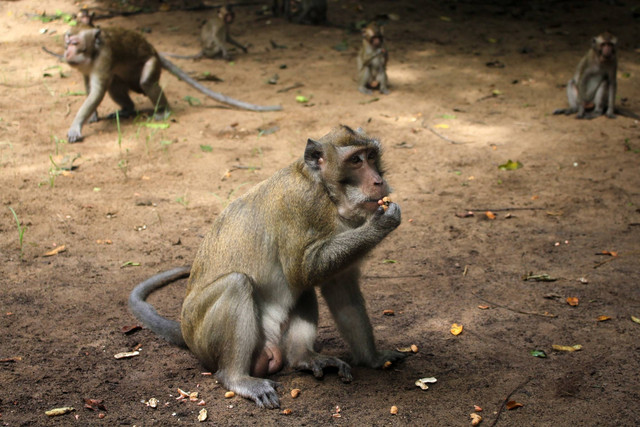
One of the most quietly remarkable stories of Merapi’s post-2010 landscape is biological. In the years since the eruption, wildlife has been steadily returning to the recovering slopes. Pioneer plant species — mosses, grasses, fast-growing shrubs — have broken through the volcanic substrate, followed by insects, birds, and small mammals. What was once grey and silent is now patched with green and alive with sound.
The wider region surrounding Merapi is rich with biodiversity. The forested slopes above the agricultural zone are home to Javan silvery gibbons, long-tailed macaques, various species of deer, and an extraordinary variety of birdlife including kingfishers, sunbirds, and — if you are very fortunate — the striking Javan eagle. The lowlands around Kaliurang offer opportunities for early-morning birdwatching that consistently surprise visitors who associate Java only with dense human settlement.
For school groups with a science or natural history focus, the Merapi region presents a rare opportunity: to witness ecological succession in real time, in one of the most geologically active environments on Earth. The contrast between the raw lava fields of the lower slopes and the recovering vegetation just a kilometre uphill is a living textbook of ecology, volcanology, and environmental resilience.
Village Life: The Experience That Changes Everything
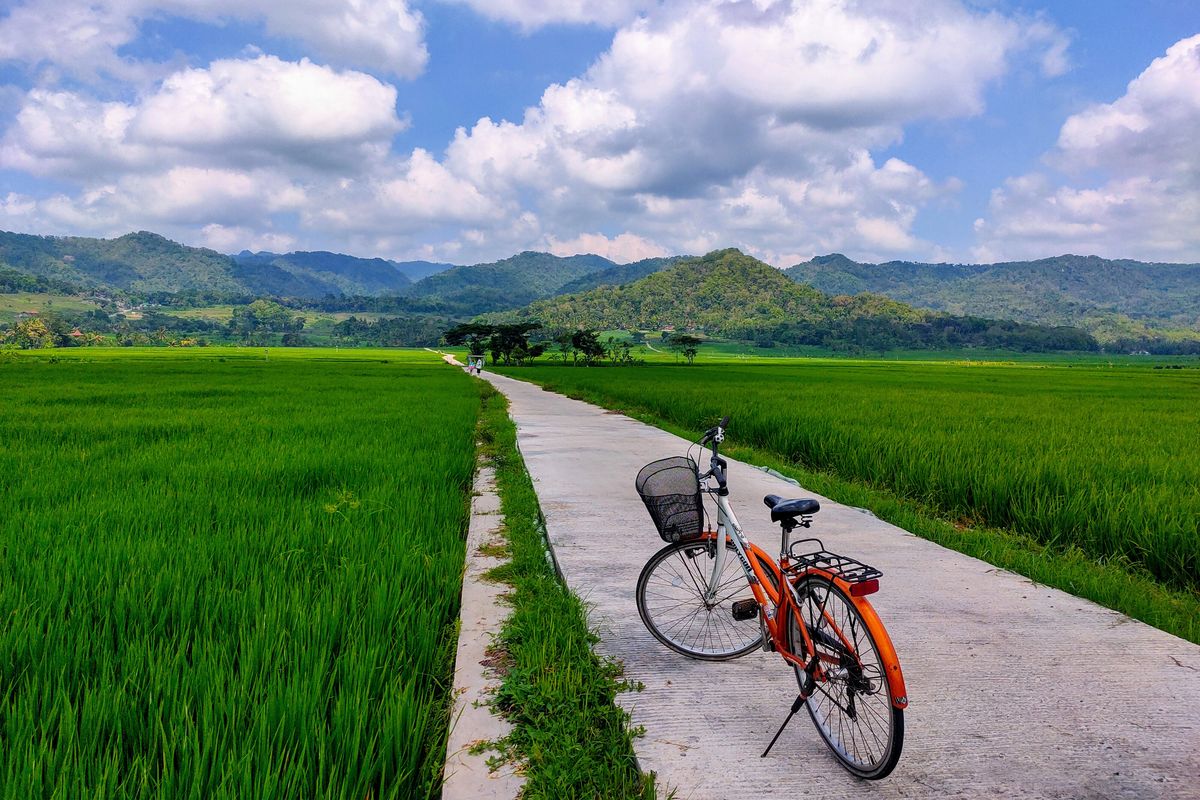
Beyond the volcano and the wildlife, there is a third dimension to a Yogyakarta adventure that is, in many ways, the most transformative of all: time spent in a Javanese village.
The villages on and around Merapi’s slopes are not reconstructed for tourism. They are working, breathing communities where rice is cultivated in terraced paddies, where tofu and tempeh are still made by hand in small family workshops, where children walk to school past roosters and banana trees, and where the morning begins with the smell of wood smoke and the call to prayer echoing across the valley. The residents — people who have lived in the shadow of one of the world’s most dangerous volcanoes, who survived its fury and rebuilt their lives — carry a quiet warmth and generosity that visitors consistently describe as one of the most memorable encounters of their entire trip to Indonesia.

Several villages in the Kaliurang and Pakem areas welcome visitors for homestay experiences, farm activities, and cultural immersion. Guests can join in rice planting or harvesting depending on the season, learn to cook traditional Javanese dishes in a family kitchen, participate in batik-making workshops, or simply sit on a porch at sunset and watch the mountain glow as the light changes. This is not a performance. This is daily life, shared generously with people who are genuinely curious about the world beyond their valley.
The contrast between the volcanic drama of the morning — the lava fields, the bunker, the dramatic stone formations — and the quiet, human warmth of a village afternoon creates an emotional range that few single-destination travel experiences can match. Children who experience both in one day carry both memories with equal weight, which is precisely what makes this kind of journey so valuable.
“The most extraordinary classroom has no walls. It is a rice field in Java, at golden hour, with a volcano on the horizon and a village elder explaining, in patient gestures and broken English, why the mountain is not the enemy — it is the reason the soil is so rich.”
— Participant reflection, school holiday programWhy This Is the Perfect School Holiday & Summer Program


We spend a lot of time telling children about the world through screens, through textbooks, through second-hand accounts. A well-designed school holiday or summer program in Yogyakarta offers something entirely different: the world itself, at full resolution, asking to be understood on its own terms.
Volcanic geology, ecological succession, tropical biodiversity, weather systems, and water cycles — all of these come alive in a way no classroom simulation can replicate. Children who spend a morning on Merapi’s lava fields come away with an intuitive understanding of geological processes that remains embedded for years. The Museum Sisa Hartaku alone provides a visceral understanding of pyroclastic flow, eruption impact, and community response that transforms abstract science into something deeply, durably felt.
Village immersion builds something that international schools increasingly recognise as a core educational goal: genuine cultural intelligence and empathy. When a student has cooked with a Javanese grandmother, learned three words of Bahasa Indonesia from a child their own age, or helped carry a harvest basket — the abstract concept of “global citizenship” becomes personal. These are the experiences that reshape worldview quietly, durably, and far more effectively than a lecture ever could.
There is a specific kind of confidence that comes from doing something physically challenging in an unfamiliar environment — and coming through it grinning. The bumpy jeep ride across volcanic terrain, the steep walk down into the bunker, the pre-dawn departure for the sunrise tour: these small challenges build resilience and self-belief in young people in ways that are difficult to manufacture in more controlled settings. Group travel through shared adventure also creates bonds between peers that outlast the holiday itself by years.
Programs can be designed for any age group from primary school children (approximately 8 and above) through to senior secondary students and university groups. Duration ranges from a single-day excursion to multi-day immersion programs incorporating the volcano tour, wildlife observation, village homestay, and cultural activities. Shakran Tour specialises in building custom itineraries that match the specific educational objectives of each school or group, guided by experienced local experts who are skilled at working with international student visitors.
Practical Notes: What to Know Before You Go
Best time to visit. The dry season — roughly May through September — offers the clearest views of Merapi’s summit and the best conditions for outdoor activities. School summer holidays align well with this window.
What to wear and bring. Comfortable closed-toe shoes or light hiking boots for the lava terrain. A light jacket for early morning and sunrise tours — temperatures at elevation are surprisingly cool before sunrise. Sunscreen, a hat, and a water bottle for daytime outings. A sense of adventure, and willingness to be surprised.
Language. Most Lava Tour guides speak functional to good English, and private tours can be arranged with bilingual guides for school groups requiring more structured educational commentary. The villages are less English-fluent — which is itself part of the value, creating genuine cross-cultural communication moments that are excellent for students.
Safety. Merapi is continuously monitored by the Indonesian Center for Volcanology and Geological Hazard Mitigation. Tour operators work within officially designated safe zones and adjust operations whenever alert levels are raised. Safety helmets are provided for all jeep tours. The activity has an excellent long-term safety record for tourist visits.
There are holidays that pass pleasantly, leaving behind a collection of photographs and a general sense of having been somewhere nice. And then there are experiences that reorient something — that give a young person, or a grown one, a new way of understanding the scale of the world, the fragility of the things we build, and the remarkable tenacity of communities that choose to stay and rebuild in the shadow of something as magnificent and dangerous as a living volcano.
Yogyakarta, and the slopes of Mount Merapi in particular, offers that second kind of experience. The jeep ride is thrilling. The stories are sobering. The village is warm and generous and genuinely other. And when you leave, you carry something back with you that cannot be purchased in a souvenir shop.
That is what a real school holiday adventure looks like. And Shakran Tour is here to help you build exactly that. 🌋
Plan Your School Holiday Adventure with Shakran Tour
We design custom Merapi Lava Tour packages, village immersion programs, and multi-day school holiday itineraries for groups of all ages. First consultation is free — let’s build something unforgettable together.
Talk to Shakran Tour →Keep Reading: From Changi to Yogyakarta: Your Perfect Weekend Escape Awaits in Indonesia’s Cultural Heart!